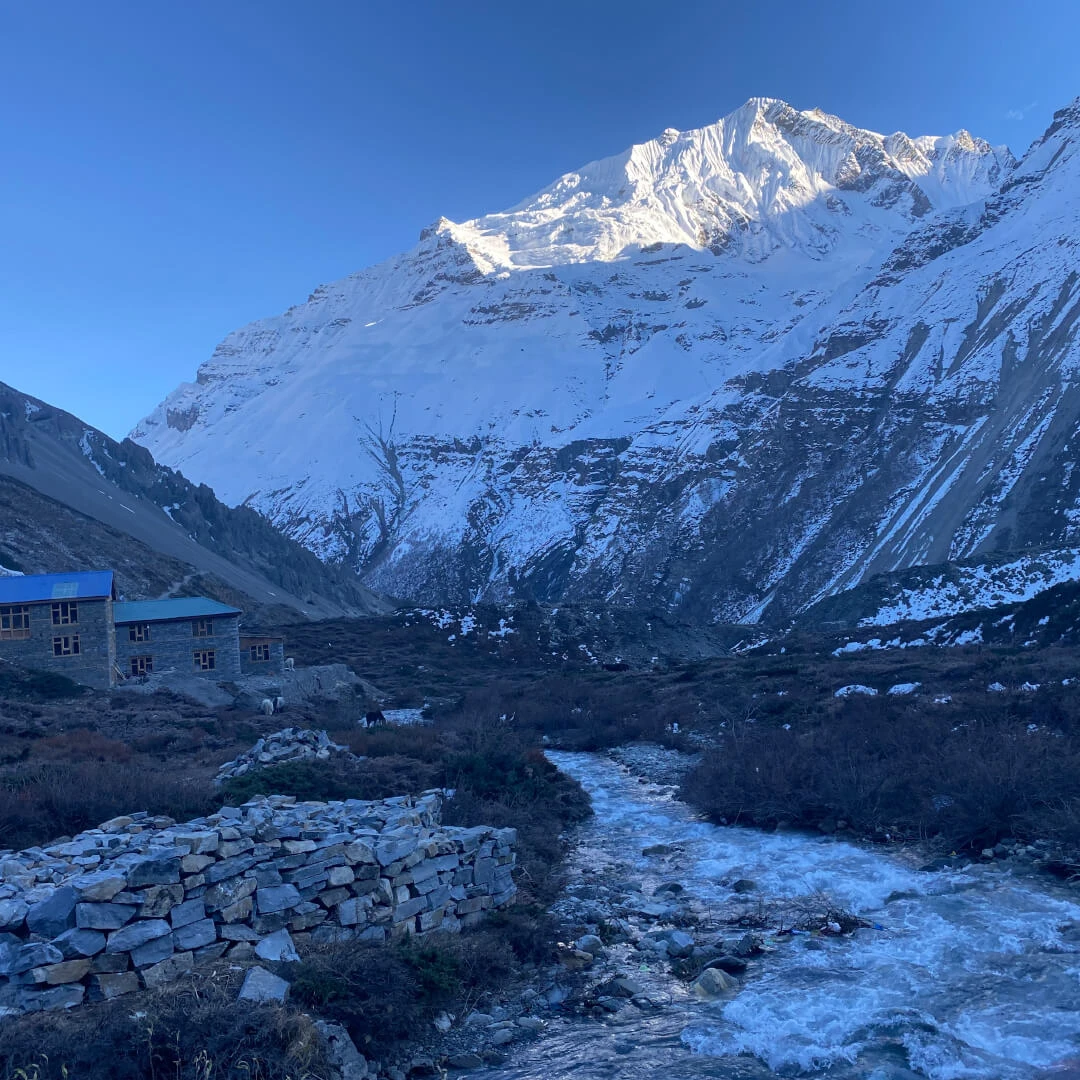


The Tilicho Lake Trek is a wonderful journey into the heart of the Annapurna region of Nepal, taking you through beautiful mountain villages, diverse landscapes, and spectacular Himalayan scenery. Located at an altitude of approximately 4,919 metres, Tilicho Lake is one of the highest glacial lakes in the world. Surrounded by towering snow-capped mountains, including Tilicho Peak (7,134m), the lake is famous for its deep blue waters and stunning natural setting. This trek follows part of the famous Annapurna Circuit route, passing through charming mountain settlements such as Dharapani, Chame, Pisang, and Manang before reaching the beautiful Tilicho Lake. Along the way, you will experience a remarkable change in scenery, from green hills, forests, and rivers to dry mountain valleys, rocky trails, and high-altitude landscapes. Manang is another major highlight, where you can explore traditional villages, Buddhist monasteries, local culture, and beautiful viewpoints. If you have extra time and energy, you can also take an optional hike to Ice Lake for even more impressive views of the Annapurna range. Unlike the full Annapurna Circuit Trek, this itinerary focuses on reaching Tilicho Lake and returning along the same route, without crossing the challenging Thorong La Pass (5,416m). It is particularly suitable for trekkers who want to experience the beauty of Tilicho Lake and the Manang region but prefer to avoid crossing a very high mountain pass. The trek still involves walking at high altitude and requires good physical fitness and proper acclimatisation, but it offers a different way to experience this remarkable part of the Himalayas. For those who wish to continue their adventure, there is also an option to extend the journey beyond Tilicho Lake, continue towards Thorong La Pass, and descend to Muktinath and Jomsom before travelling to Pokhara. This extension allows you to complete more of the classic Annapurna Circuit. Whether you choose to explore Tilicho Lake as a standalone trekking adventure or combine it with the wider Annapurna Circuit, the journey offers a wonderful mix of mountain scenery, traditional villages, local culture, and unforgettable Himalayan experiences.

Tilicho Lake Trek- 11 days
- Duration11 Days
- Difficulty Level Strenuous
- Altitude 4,920 m
- Trip Type Trekking | Hiking
- Start and End Kathmandu - Kathmandu
- Best Time Feb-May, Sep-Dec
- Enjoy a scenic drive from Kathmandu to Dharapani through beautiful hills, rivers, waterfalls, and mountain landscapes.
- Explore charming Himalayan villages, including Chame, Pisang, and Manang.
- Discover the beautiful Manang village, its ancient monasteries (Gompas), traditional settlements, and local mountain culture.
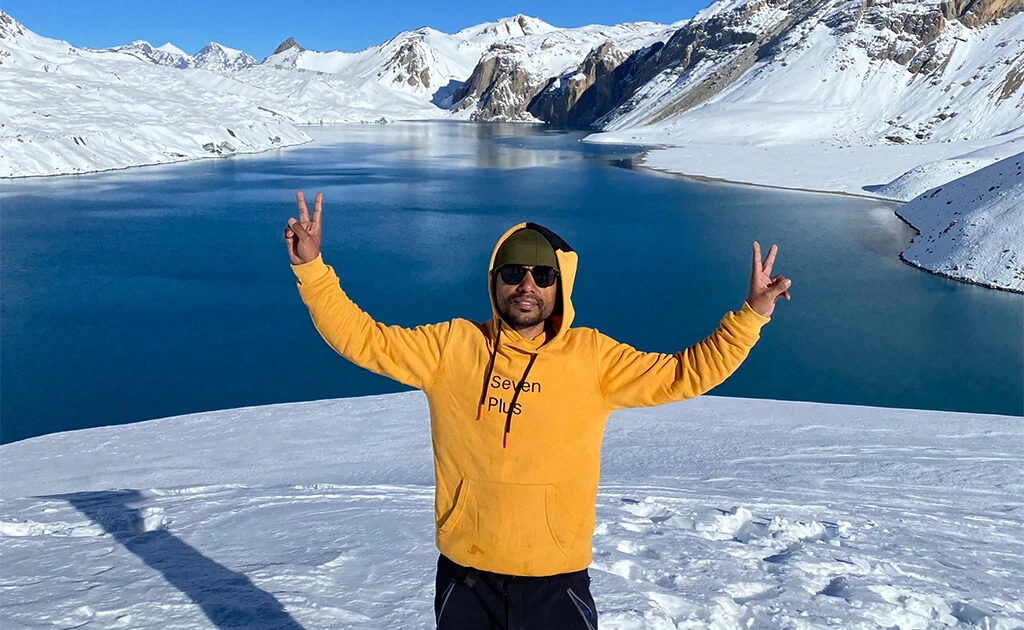
- Visit the spectacular Tilicho Lake (4,919m), one of the world's highest glacial lakes, surrounded by towering Himalayan peaks.
- Enjoy breathtaking views of Annapurna II, Annapurna III, Gangapurna, Tilicho Peak, and other magnificent mountains.
- Take an optional hike to Ice Lake (Kicho Tal) for spectacular panoramic views of the Annapurna range.
- Explore scenic viewpoints, peaceful mountain valleys, and diverse Himalayan landscapes.
- Experience local hospitality, traditional teahouses, and the unique lifestyle of the Manang region.
Iconic Holiday Nepal team members will welcome you at the airport and help you with your luggage. They will drop you at the hotel. Later, we will meet you in our office and prepare for the trek. You'll attend a short briefing from the trek guide and do the final packing. As we have obtained all the permits in advance.
The day starts early, and you will drive to Chame via Jagat. On the way, we will cross the Besisahar district headquarters of Lamjung. You will be driving along the meandering hilly road of Nepal with a stunning view of snowcapped mountains, verdant hills, and terraced farmlands. Enjoy a drive alongside fast-flowing rivers like Trishuli and Marshyangdi. Chame is a small Himalayan town with shops and restaurants.
We are entering the alpine area from here onwards. The scenery is breathtaking in this part of the Tilicho Lake trek route. Leaving Chame, we pass by mani walls and small settlements. The trail is easy. After Bhratang (2350m), the trail is steep for about an hour passing through a forested area. We cross a river, and the trail begins to move away from Marshyangdi. Enjoying the views of Pisang Peak (6091m), we cross a wooden bridge and reach Upper Pisang.
As we entered the high Himalayan area, the landscape became arid, and the weather became cooler. We begin our walk on a level path that climbs up a ridge once we are out of the valley. The trail offers an amazing view down into the Manang Valley. We can see Annapurna III (7,555m)on our left. The trail goes through the village of Hongde, which has a small airstrip and walks toward Braga. There is a beautiful ancient monastery in Braga. A walk of another 30 minutes from Braga (3360m) will take us to Manang.
We take a break for acclimatization today. Manang is a beautiful village located very near the Gangapurna Glacier. An emerald lake, which goes by the name Gangapurna, lies at the foot of the glacier. We will spend the day climbing a small hill above the village of Braga. Braga, 45 minutes from Manang, is a small Himalayan village. If you want to add some adventure to your trek, then go on an acclimatization hike to Ice Lake, which is called Kicho Tal locally. It is a day hike and will take you around 6 to 7 hours.
Today, we leave the Round Annapurna Trekking trail and walk toward Khangsar. The walk begins with a gradual descent to the Jharsang Khola stream. After crossing the stream on a suspension, we continue our walk toward Khangsar. The trail offers views of different mountain peaks of the Annapurna Region. Mainly Gurungs reside in Khangsar. There is a small monastery, mani walls, and a lot of prayer flags in/around the village. Then a further 2 hours trek, we will reach Tilicho Basecamp.
We start trekking early in the morning. The trail makes a long climb on a moraine to an altitude of 4,710 meters, from where we get the first view of the lake. We continue further and reach the lake. The lake provides a stunning view of the Gangapurna, Manaslu, Himlung, and Annapurna mountains. Tilicho Lake is 4 kilometers long and about 2.5 kilometers wide. After spending some time at the lake, we descend to the base camp, then siri Kharka.
Trek alongside a river and pass a monastery on your trek from Siri Kharka to Manang village. On the way, you will stop at Khangsar for lunch. Khangsar is one of the oldest villages in the region and has a rustic charm. Tahrap Monastery of Khangsar is one of the oldest monasteries of the region and is credited for starting a monastic settlement. You will be crossing a suspension bridge and walking on a descending trail on your way to Manang village.
Today, you will be leaving Manang village for Besisahar and driving past the wonderful landscape featuring a tumbling waterfall, snowy mountains, brown hills, and pine trees. Moreover, enjoy a drive past traditional settlements which was along the ancient Tibet trade route. The small town of Besisahar caters to the needs of trekkers, and there are many hotels as well.
After breakfast, we will drive toward Kathmandu. The drive is pleasing as it passes through beautiful terraced fields and bustling bazaars, giving you an insight into day to day life of the local people. After passing through major highway bazaars like Dumre, Mugling, Malekhu, Galchhi, and Naubise, we climb the winding roads of Nagdhunga to enter Kathmandu. Upon arrival in Kathmandu, you will be transferred to your hotel. We’ll meet in the late evening over a farewell dinner.
The trek has ended. You fly back to your home today. Our airport team will drop you at the Tribhuvan International Airport.

- Airport pick up & drop off service by a private tourist vehicle
- Three star hotel accommodation in Kathmandu, including breakfast
- All standard meals during the trek (Breakfast, lunch and dinner)
- Guesthouse accommodation during trek twin sharing basis
- English-speaking trekking guide
- The required number of local staff and porters to carry your luggage during the trek (We assign one porter for every two guests)
- Food, accommodation, salary, insurance, equipment and medicine for all staff
- Permits for Annapurna Conservation Area and TIMS (Trekkers' Information Management System)
- Private 4WD drive from Kathmandu to Chame, Manang to Beshishar, and then Kathmandu via private car
- All our government taxes, VAT, Tourist service charges
- Official expenses
- International airfare and airport departure tax
- Lunch and Dinner in Kathmandu
- Nepal entry visa | Nepal Visa Information
- Personal trekking equipments
- Tips for trekking staff and driver (Tipping is expected)
Tilicho Lake Trek Difficulty
The Tilicho Lake Trek is a moderately challenging to strenuous high-altitude trek, suitable for trekkers with good physical fitness and a reasonable level of hiking experience. The trail gradually becomes more demanding as you gain elevation, with several steep uphill and downhill sections, rocky paths, and uneven terrain. You can expect to walk around 5–7 hours a day, depending on the route and walking pace. One of the most challenging sections is the trail from Tilicho Base Camp to Tilicho Lake. This stretch passes through steep, rocky, and landslide-prone slopes, where trail conditions can change depending on the weather. If there is fresh snowfall or accumulated snow, the route can become slippery and difficult to navigate. For this reason, reaching the lake requires extra care, proper preparation, and favourable weather conditions. Altitude is another important factor to consider. As the trek takes you above 3,000 metres and eventually to approximately 4,919 metres at Tilicho Lake, proper acclimatisation is essential. Spending an extra day in Manang and walking at a comfortable pace can help your body adjust to the increasing altitude and reduce the risk of altitude sickness. The accommodation and facilities also become more basic as you move higher into the mountains. While you can find relatively comfortable teahouses in lower villages, facilities at Tilicho Base Camp are limited. With good preparation, suitable trekking gear, and a steady pace, this trek can be a rewarding experience for those looking to explore one of Nepal's most beautiful high-altitude destinations.
Best Season for Tilicho Lake Trek
The best time to visit Tilicho Lake is during spring (March to May) and autumn (late September to November). These seasons generally offer more favourable weather, better trail conditions, and clearer mountain views, making them suitable for exploring the high-altitude landscapes of the Annapurna region. Spring brings warmer temperatures, blooming rhododendrons, and fresh greenery across the lower valleys. As you approach Manang and Tilicho Base Camp, the scenery gradually changes into a dramatic alpine landscape surrounded by snow-covered mountains. Autumn is another excellent season, with generally clear skies, pleasant daytime temperatures, and spectacular views of the Annapurna and surrounding Himalayan ranges. We recommend avoiding the main winter and monsoon seasons for this trek. During winter (December to February), heavy snowfall can cover the trail, particularly above Manang and around Tilicho Base Camp. The final section leading to Tilicho Lake can become especially difficult and potentially dangerous when covered with snow and ice. Similarly, during the monsoon (June to early September), frequent rainfall, cloudy conditions, landslides, and unstable trails can make trekking more challenging. For safety reasons, we recommend planning your Tilicho Lake Trek in spring or autumn, when conditions are generally more suitable for reaching the lake. However, weather in the Himalayas can change quickly, and the final decision to continue towards the lake should always depend on actual trail conditions and local guidance.
Accommodation and Meals
Accommodation during the Tilicho Lake Trek ranges from comfortable hotels in Kathmandu to traditional mountain teahouses along the trail. In villages such as Dharapani, Chame, Pisang, and Manang, you will find a variety of accommodation options, with relatively better facilities and more comfortable lodges available in Manang. As the Annapurna Circuit is a popular trekking route, accommodation choices can vary depending on the season and availability. If you prefer upgraded accommodation, particularly in Manang, we can arrange more comfortable lodges according to your preferences and budget. Just let us know your priorities when booking, and we will do our best to make suitable arrangements. Beyond Manang, towards Tilicho Base Camp, accommodation becomes more basic due to the remote mountain location. Facilities and room choices are limited, especially during busy trekking seasons, so some flexibility is necessary. Overall, we aim to arrange the best available accommodation throughout the journey while keeping your comfort, preferences, and the nature of the trekking route in mind. Meals are generally available at the teahouses, with traditional Nepali dal bhat being one of the most common and filling options. You can also find Tibetan bread, noodles, soups, porridge, momos, thukpa, potatoes, and other simple meals along the route. Food choices become more limited at higher elevations, so it is helpful to be flexible with your meals.
Travel Insurance
Travel insurance is strongly recommended for the Tilicho Lake Trek. As this journey takes you into remote mountain areas and reaches an altitude of approximately 4,919 metres, it is important to have insurance that covers high-altitude trekking, emergency medical expenses, and helicopter evacuation. Although we take appropriate precautions and plan the itinerary with acclimatisation in mind, high-altitude trekking always involves certain risks. Weather changes, difficult trail conditions, injuries, or altitude-related health problems can sometimes require medical assistance or emergency evacuation. Please make sure your insurance policy specifically covers trekking at the maximum altitude of your itinerary and emergency helicopter evacuation in Nepal. Some standard travel insurance policies exclude high-altitude activities or have specific altitude limits, so check the details carefully before your departure. Your safety is always our priority. Our trekking team monitors the group's condition and local trail conditions throughout the journey and makes decisions based on safety, weather, and individual fitness.
Q1. How long is Tilicho Lake Trek?
We have a 15 days long Tilicho Lake trek. If you have a few additional days and are physically fit, then you can consider combining Thorong La pass in the venture. We also organize a short Tilicho lake trek for our guests.
Q2. How difficult is Tilicho Trek?
Tilicho Lake Trek is a moderately difficult trek. This trek fits perfectly for experienced trekkers. The terrain is rough and steep with high elevations up to 4,920 m.
Q3. How much does it cost to go to Tilicho Lake?
The Tilicho Lake trek costs around USD 950 to USD 1300 per head, depending upon the group size. Iconic Holiday Nepal offers the best Tilicho Lake trek price with no hidden costs.
Q4. How do I get from Tilicho Lake to Pokhara?
From Pokhara, you have to drive to Chamje. It's an 8 hours drive. The trek begins from Chamje, and you have to walk for 6 to 7 days to reach Tilicho Lake.
Q5. Is Tilicho Lake the highest lake in the world?
No, Tilicho Lake is the second-highest lake in the world, situated at 4,919 meters. Kajin Sara Lake in the Chame rural municipality is the highest lake in the world, situated at 5,002 m
Q6. What is the depth of Tilicho Lake?
Tilicho has dimensions of length of 4 km (2.5 mi) & width of 1.2 km (0.75 mi) making a Surface area of 4.8 km2 (1.9 sq mi) with an average depth of 85 m (279 ft). The fresh water of Tilicho has a Water volume of 156×106 liter.
Q7. When can you visit Tilicho Lake?
You can visit Tilicho Lake from March to April (spring) and October to November (autumn). These are the best months to trek to Tilicho Lake.
Q8. Can you swim in Tilicho Lake?
No, you cannot swim in Tilicho lake because the shoreline is inaccessible, and there's no provision for swimming in the lake by the government.
Q9. Is there accommodation near Tilicho lake?
The last accommodation facility is available at the Tilicho Base Camp. From the base camp, the lake is located 4-5 hours away. You'll hike to Tilicho Lake and descend back to base camp to spend the night.
Q10. Is Tilicho lake water fresh?
Yes, Tilicho Lake is one of the highest freshwater lakes in Nepal. No sign of aquatic animals has been seen in this lake till now.
Q11. How do we make sure you get the best experience of this trek?
Our expert native guide and porters will take care of your needs and safety in the mountains. While our office team will make sure all the bookings and reservations are done on time for a hassle-free journey for you. Our on-field team will also introduce you to Tamangs and their heritage.

Send Inquiry
Our global team of experts is here to assist you.
Need Travel Advice