Nar Phu Valley and Thorong la pass Trek - 16 days

Things to Know
  • Duration16 Days
  • Difficulty Level Technical Challenging
  • Altitude Thorang La Pass 5,416 m
  • Trip Type Trekking | Hiking
  • Start and End Kathmandu - Kathmandu
  • Best Time Feb-May, Sep-Dec
What You’ll Do
  • Scenic Drive to Dharapani – Journey through winding mountain roads, lush hills, rushing rivers, and traditional terraced farmland as you travel from Kathmandu into the Annapurna region.
  • Discover the Hidden Nar Phu Valley – Explore the remote villages of Koto, Meta, Phu Gaon, and Nar, surrounded by dramatic cliffs and high Himalayan landscapes.
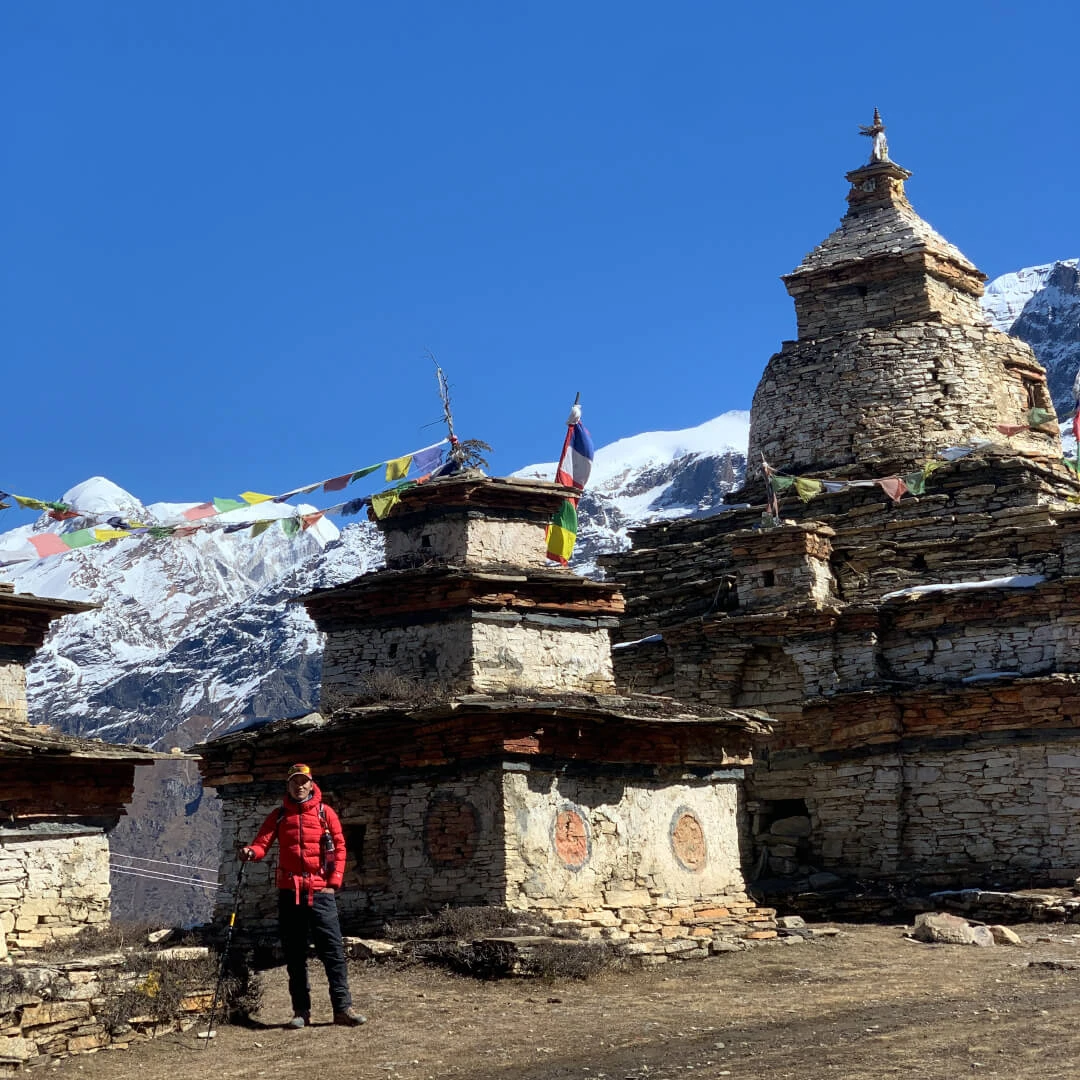
  • Experience Ancient Himalayan Culture – Walk through Tibetan-influenced villages filled with Buddhist monasteries, mani walls, prayer flags, and centuries-old traditions that remain deeply connected to local life.
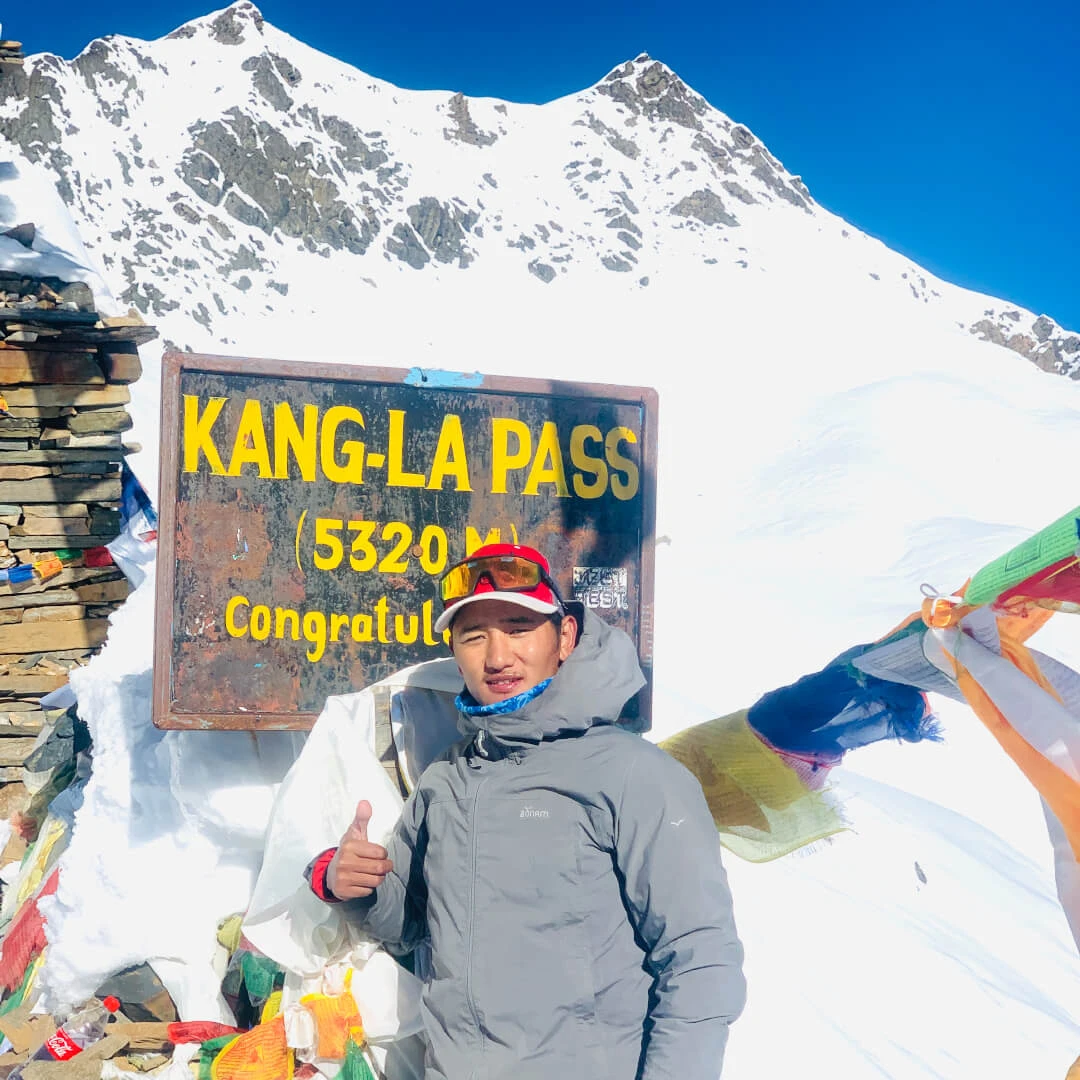
  • Cross Kang La Pass (5,320 m) – Take on the challenging Kang La Pass and enjoy spectacular views of Annapurna II, Gangapurna, Tilicho Peak, and surrounding Himalayan peaks.
  • Explore the Manang Valley – Trek through the beautiful Manang region, where rugged landscapes, traditional villages, and towering mountains create an unforgettable Himalayan experience.
  • Cross Thorong La Pass (5,416 m) – Reach the high point of the journey at Thorong La, one of the highest trekking passes in the world, before descending toward Mustang.
  • Visit Sacred Muktinath – Discover the revered Muktinath Temple, a pilgrimage site of great importance to both Hindus and Buddhists, set amid the dramatic landscapes of Mustang.

The Nar Phu Valley with Annapurna Circuit Trek is a wonderful combination of two of the most rewarding trekking experiences in the Annapurna region. It brings together the quiet, remote beauty of Nar Phu with the classic trails of the Annapurna Circuit. The journey begins with a scenic drive from Kathmandu to Dharapani. From there, we follow the Annapurna Circuit trail to Koto before entering the hidden Nar Phu Valley. The trail takes us through the beautiful villages of Phu and Nar, where ancient Tibetan-influenced culture, monasteries, stone houses, and traditional mountain life can still be seen. One of the highlights is crossing the challenging Kang La Pass (5,320 m). After the pass, we reconnect with the Annapurna Circuit and continue through Manang, Yak Kharka, and over the famous . Finally, we descend to the sacred Muktinath, surrounded by spectacular Himalayan landscapes.

This trek is a beautiful mix of remote valleys, traditional villages, high mountain passes, dramatic landscapes, and Himalayan culture. It is ideal for trekkers looking to experience both the hidden side and the classic side of the Annapurna region. At Iconic Holiday Nepal, we offer flexible and customized itineraries with experienced guides and personal service, making your journey safe, comfortable, and memorable.

Itinerary
Expand AllCollapse All

  • Altitude1,400 m
  • AccommodationHotel
  • Time1-2 hours

An assistant from Iconic Holiday Nepal will be at the airport to pick you up. He will greet you and transfer you to your hotel by private vehicle.

  • Altitude1860 m
  • AccommodationTea House
  • Time9-10 hrs

Today, we will begin our journey on a scenic drive from Kathmandu to Dharapani in a private tourist vehicle. The journey will last approximately 9 to 11 hours in total towards Dharapani, where the road to Besisahar is smooth. After Besisahar, we will continue on a thrilling dirt road for about 3 to 4 hours to reach our destination, Dharapani. We will ensure the smoothest possible ride by assigning a vehicle suited to the road conditions.

  • Altitude2620 m
  • AccommodationTea House
  • Time5-6 hours

We start our trek walking towards Bagarchap, a Buddhist village from where we can see the first view of Mount Annapurna II. The rough trail then takes an ascent to Timang village situated at an altitude of 2,620 m. From Timang, we can see the beautiful view of Mt. Manaslu (8,163 m).Continuing the trek, we walk through the pine forests up to Chame and lastly to the Koto village. 

  • Altitude3,560 m
  • AccommodationTea House
  • Time5-6 hours

The distance to cover today is quite long so we start our trek early today. The Nar Phu trekking route today passes through the restricted area of Nar Phu valley, dense pine forests, cave shelters, pilgrims’ resting places, waterfalls here and there, and rough steep ascents. After walking for 7 to 8 hours, we finally reach the destination for the day, Meta. From Meta village, the scenery of the Himalayan ranges can be seen clearly with mesmeric views of Mt. Annapurna II, Mount Gangapurna, and Tilicho Peak decorating the skyline.

  • Altitude4,080 m
  • AccommodationTea House
  • Time7-8 hrs

we continue along the trail where the unique and colorful chortens, for which the Nar Phu Valley is well known, begin to appear. The path crosses several suspension bridges, adding both excitement and scenic charm to the journey. There are no residential houses along this stretch, only the remnants of the old Khampa settlement, once used by Tibetan descendants. Following the rocky trail beside the Phu Khola, we are greeted by a striking line of chortens guiding the way towards Phu Gaon (4,080 m), a traditional village that beautifully reflects the ancient Tibetan-influenced culture of the region.

  • Altitude4,080 m
  • AccommodationTea House
  • Time4-5 hrs

We stay one more day here at Phu Gaun before hiking high elevation. A very old Buddhist Monastery known as Tashi Lakhang monastery also listed among the 108 world’s greatest monasteries lies at a short distance in Phu Gaon. To keep your body active we will hike to Himlung Himal Base Camp or Glacier Valley. Likewise, even roaming around Phu Village has a lot to offer.

  • Altitude3490 m
  • AccommodationTea House
  • Time6-7 hours

Today, we leave the mystical village of Phu and descend slightly toward Nar Phedi, a lower elevation stop before reaching Nar village. The trail retraces part of the path from earlier days and includes crossing a dramatic 80-meter-deep narrow canyon via a suspension bridge. Nar Phedi is home to a small nunnery where you will be warmly welcomed by the resident nuns. They offer basic but clean accommodation and delicious, simple meals. In the evening, join the nuns for their daily prayer session in the monastery—an intimate and spiritually enriching experience.

  • Altitude4,110 m
  • AccommodationTea House
  • Time2.5 hrs

After a hearty breakfast prepared by the nuns, we make a gentle ascent toward the traditional village of Nar. This shorter trekking day allows ample time to explore the village,This day of Nar Phu trekking can be utilized to explore around the Nar valley. Nar is more energetic than the Phu valley. One can encounter people printing flags, the echoing sound of drums, prayers in the monasteries, the monks spinning the prayer wheels and many more. The rest of the day can be used to rest and relax in the beautiful Nar village.

  • AltitudeKang La Pass 5320m
  • AccommodationTea House
  • Time7-8 hrs

The trek today will be very long; therefore, We start early before sunrise today towards Kang La Pass. The pass is not difficult, but the effect of altitude can be easily felt. From the top of the pass, a brilliant view of Mt. Annapurna II, Gangapurna, and Tilicho Peak can be witnessed.The Nar Phu trail from the pass goes steeply down towards Ngawal. The village of Ngawal is very different from the villages recently visited as there are nice guesthouses with Wi-Fi and better phone signals here.

  • Altitude3,540 m
  • AccommodationTea House
  • Time4-5 hrs

We continue our trek in Annapurna region, walking through the big hills, jungle and wetlands. On the way, we can see beautiful landscapes, stupas and school. After 4 to 5 hours of walking on Annapurna trail, we will reach Manang (3,540 m), one of the most vibrant and happening villages of the trek. Known as a key stop on the Annapurna Circuit trek, Manang offers a mix of cultural charm and mountain scenery before heading toward higher altitudes.

  • Altitude4,050 m
  • AccommodationTea House
  • Time3-4 hrs

Leaving Manang, the trail ascends gradually through alpine landscapes as you head for Yak Kharka.This stage marks your transition into higher, drier terrain where only hardy shrubs and yaks thrive. We make the climb steadily through Tenki Manang, leaving the Marsyangdi Valley. Continuing along the Jarsang Khola Valley, we arrive at Yak Kharka at 4,050 m. At Yak Kharka, the vegetation thins out and herds of yaks graze along the slopes.

  • Altitude4,525 m
  • AccommodationTea House
  • Time3-4 hrs

Today we will trek to the base of the Thorang La Pass (5,416m). Climbing up a ridge, we will cross the bridge over the Marshyangdi River. Next, we continue to walk through the narrow trail and descend to Thorang Phedi.

  • Altitude5416m Thorong la Pass
  • AccommodationHotel
  • Time6-7 hrs

Today going to be a difficult day of this trek. We will trek for about 3-4 hours to reach the Top of Thorang La Pass at 5,416 meters. The trek rewards with the beautiful views of Mustang and Kali Gandaki Valley with surrounding peaks. Take your moment to take some photos at the pass. The descent is as difficult as the ascending. Descending from Thorang La Pass, we continue to the famous Temple Muktinath. Overnight stay at Muktinath.

  • Altitude822 m
  • AccommodationHotel
  • Time5-6 hrs

After breakfast, drive from Muktinath to Pokhara by private vehicle, following the scenic Kali Gandaki Valley. The journey passes through Jomsom, the beautiful apple-growing village of Marpha, and the natural hot-spring area of Tatopani. Enjoy spectacular views of the surrounding mountains, waterfalls, deep gorges, and traditional villages along the way.

  • Altitude1,400 m
  • AccommodationHotel
  • Time6-7 hours

The tourist bus to Kathmandu from Pokhara leaves around 7 a.m. Therefore, be ready with your backpack to catch the bus to Kathmandu. The Tourist Bus takes around 7-8 hours.

    Our staff from Iconic Holiday Nepal will escort you to the airport in a private vehicle and bid farewell. We wish you the best of luck for your next trip or adventure.

    Trip Cost Details
    Included
    • Airport Pick up and Drop Service
    • Three Star-Hotel in Kathmandu and Pokhara with Breakfast
    • Best available accommodations during the trek 
    • Meals (Breakfast, lunch, dinner) and seasonal fruits 
    • English-speaking government-licensed trekking Guide
    • Guide salary, food, equipment, and insurance
    • Porter to carry your luggage during the trek | who can carry maximum 20 kg
    • All applicable Nar-Phu special permits, ACAP and Local permits
    • Local bus service from Muktinath to pokhara
    • Local Jeep form kathmandu to Dharapani
    • Tourist Bus tickets from Pokhara to Kathmandu
    • Iconic Holiday Nepal Duffel Bag Trekking map, and Water purification tablets
    • First-aid kit including an oximeter to check your heart rate and oxygen saturation
    • Luggage storage at our office for the duration of the trek 
    • Official expenses, and government taxes, and VAT.
    Excluded
    • International flight ticket
    • Nepal entry visa | Nepal Visa Information 
    • Travel and health insurance to cover emergency rescues and evacuations.
    • Kathmandu Day tour, Pokhara to Kathmandu flight tickets, Additional snacks, alcoholic/non-alcoholic drinks, hot/bottled water, Wi-Fi, battery charging, hot shower, etc., during the trek.
    • Private jeep service Muktinath to Pokhara : 180 $
    • Lunch and Dinner and extra night hotels in Kathmandu
    • Tips for guide and porters (it is appreciated)
    Useful Info

    Nar Phu Valley Trek Difficulty

    The Nar Phu Valley Trek with Thorong La Pass is a challenging high-altitude adventure designed for trekkers who are comfortable walking on rugged mountain terrain. Previous trekking experience is highly recommended, along with good physical fitness and a positive mindset for traveling through one of Nepal’s most remote Himalayan regions. You can expect to walk for around 6–8 hours a day, with some longer days depending on the trail and altitude. The route includes steep ascents, rocky sections, suspension bridges, narrow mountain paths, and several demanding uphill and downhill stretches. Crossing Kang La Pass (5,320 m) and Thorong La Pass (5,416 m) makes altitude management an important part of the trek. Walk at a steady pace, stay well hydrated, eat regularly, and allow your body enough time to acclimatize. Avoid alcohol and smoking at high altitude, and always inform your guide if you experience symptoms such as persistent headache, dizziness, unusual tiredness, nausea, or difficulty breathing.

    Preparations

    Good preparation can make the Nar Phu Valley Trek much more enjoyable. Focus your training on endurance, leg strength, balance, and long-distance walking. Start with regular walks and gradually increase your distance and uphill walking time. Hiking on hills or uneven terrain is particularly useful because the actual trek involves continuous ascents and descents. You can also include activities such as cycling, swimming, running, stair climbing, and strength exercises for your legs and core. Ideally, begin your preparation 6–8 weeks before the trek and include a few longer hikes carrying a light daypack. The goal is not speed but building the stamina and confidence needed for several consecutive days in the mountains.

    Permits for Nar Phu Valley Trek

    The Nar Phu Valley is a restricted trekking area in the Annapurna region because of its remote location, border sensitivity, and unique cultural heritage. Trekkers therefore need a Nar Phu Restricted Area Permit in addition to the permits required for the Annapurna Circuit section. Depending on the current regulations and itinerary, the required permits may include:

    • Nar Phu Valley Restricted Area Permit
    • Annapurna Conservation Area Permit (ACAP)

    Permit fees and requirements can change according to government regulations, trekking season, and the duration of your stay in the restricted area. Our team will arrange the necessary permits before you enter the Nar Phu Valley Trek route, so you can focus on enjoying the journey.

    Best Time for Nar Phu Valley Trek

    The best seasons for the Nar Phu Valley Trek with Thorong La Pass are spring (March to May) and autumn (mid september to mid December). These months generally offer clearer skies, pleasant trekking conditions, and excellent Himalayan visibility. October and November are especially popular for the Nar Phu and Annapurna Circuit route, while March and April bring warmer conditions at lower elevations and beautiful spring landscapes. The monsoon months can bring rain and cloudy conditions in lower areas, while winter can bring heavy snowfall and difficult conditions around Kang La Pass and Thorong La Pass. Always check the latest mountain and trail conditions before departure.

    Accommodation and Food

    Accommodation during the Nar Phu Valley Trek is mainly in simple local teahouses and lodges. Because Nar Phu remains a remote and less-developed trekking region, facilities are more basic than on popular routes such as the Everest Base Camp Trek or main Annapurna Circuit.

    Rooms are generally clean and comfortable, usually with twin beds and shared bathroom facilities. Facilities become increasingly basic as you move deeper into Nar Phu Valley. A warm sleeping bag is recommended, especially for the higher and colder nights. Meals are usually simple, nutritious, and freshly prepared at local teahouses. You can expect a combination of Nepali, Tibetan, and Indian-style dishes, including dal bhat, noodles, rice, pasta, potatoes, soups, vegetables, and eggs. Food choices become more limited in the remote villages, so carrying a few personal snacks such as energy bars, dried fruit, or chocolate is a good idea.

    Travel Insurance for Nar Phu Valley Trek

    Travel insurance is essential for the Nar Phu Valley Trek with Thorong La Pass because this is a remote, high-altitude trekking route where access to medical facilities can be limited. Choose a comprehensive travel insurance policy that covers high-altitude trekking up to at least 6,000 meters, emergency medical treatment, and helicopter evacuation where required. It is also wise to check whether your policy covers trip interruption, flight delays or cancellations, and baggage loss or theft. Before starting the trek, please provide your insurance details to our team. Having appropriate coverage gives you and your family greater peace of mind while exploring the remote Nar Phu Valley, Kang La Pass, Manang Valley, Thorong La Pass, and Muktinath.

    Our global team of experts is here to assist you.

    Need Travel Advice