Gokyo Valley and Renjo La Pass Trek- 14 days

Things to Know
  • Duration14 Days
  • Difficulty Level Technical Challenging
  • Altitude 5,360 m Renjo La Pass
  • Trip Type High Altitude Trekking
  • Start and End Kathmandu and Kathmandu
  • Best Time Mar-May, Sep-Nov
What You’ll Do
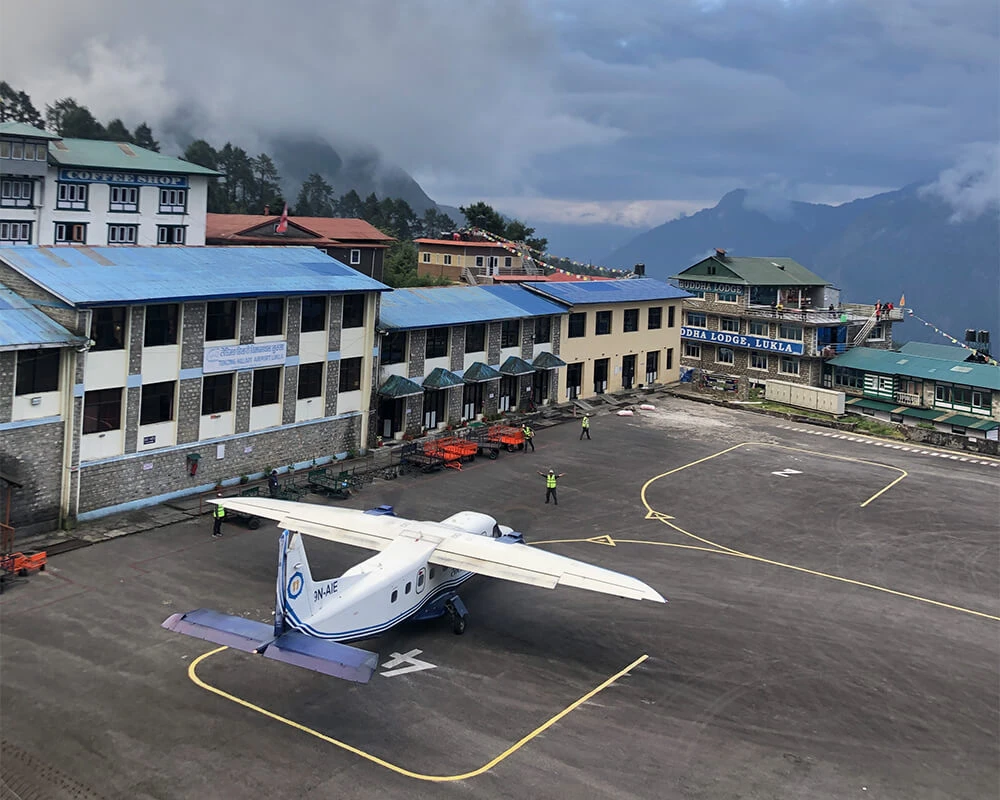
  • Scenic Lukla Flight: Enjoy spectacular mountain views on the flight to and from Lukla.
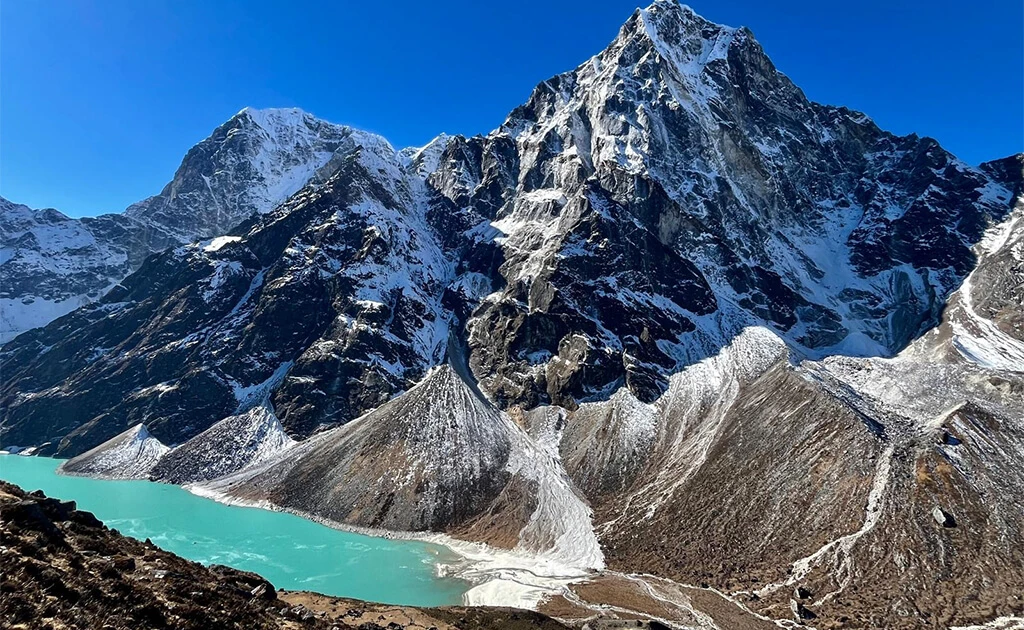
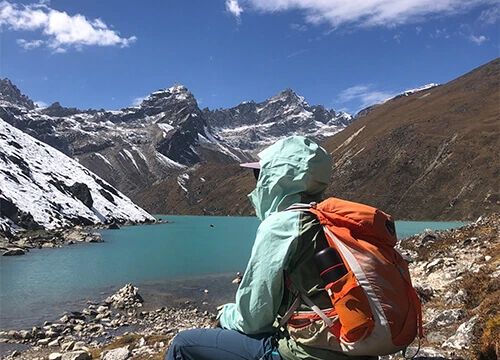
  • Beautiful Gokyo Lakes: Explore the peaceful turquoise lakes surrounded by stunning Himalayan peaks.
  • Gokyo Ri Sunrise: Hike to Gokyo Ri (5,357 m) for breathtaking views of Everest, Lhotse, Makalu, Cho Oyu, and more.
  • Renjo La Pass: Cross Renjo La (5,360 m) and enjoy wide views of the Everest and Himalayan ranges.
  • Ngozumpa Glacier: Walk alongside the impressive Ngozumpa Glacier, the largest glacier in Nepal.
  • Everest Region Views: Admire spectacular views of Everest, Lhotse, Nuptse, Makalu, Cho Oyu, and Ama Dablam.
  • Sherpa Culture: Experience traditional Sherpa villages, Buddhist monasteries, prayer flags, and local hospitality.
  • Sagarmatha National Park: Trek through rhododendron forests, mountain valleys, suspension bridges, and diverse Himalayan landscapes.
  • Peaceful Alternative to EBC: Enjoy the beauty of the Everest region on quieter trails away from the main EBC route.

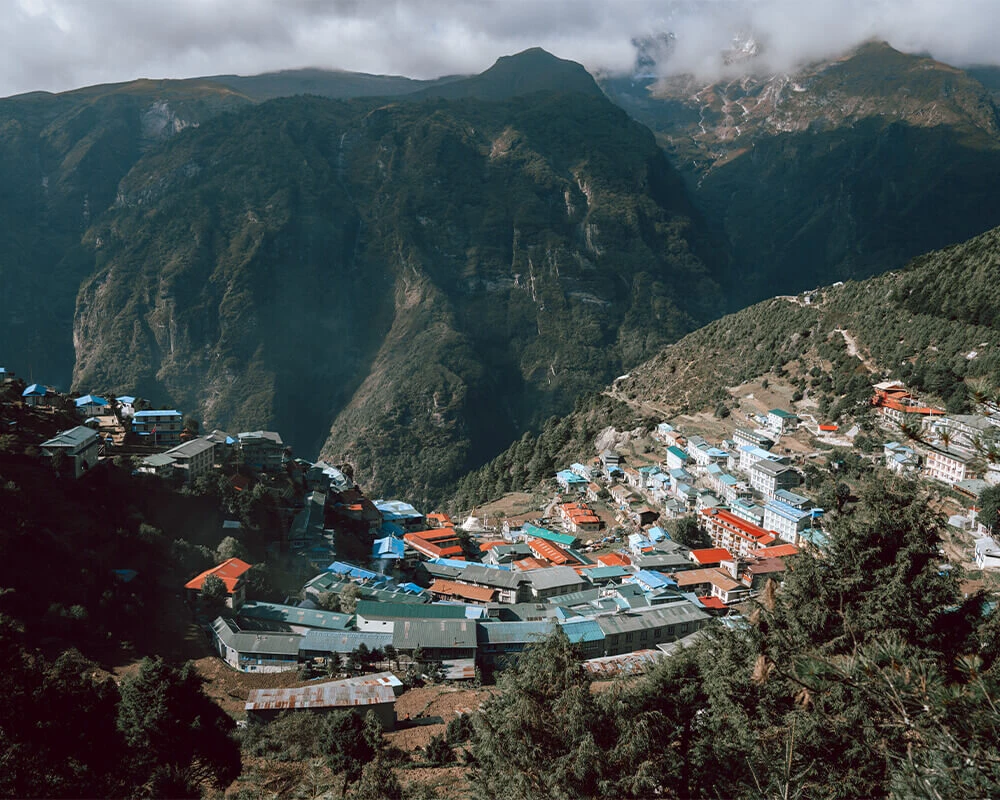
The Gokyo Lakes and Renjo La Pass Trek is a spectacular journey through the quieter side of the Everest region, combining turquoise glacial lakes, dramatic mountain views, Sherpa culture, and a challenging high-altitude pass. The trail takes you through beautiful valleys, forests, stone-built villages, alpine meadows, and rugged Himalayan landscapes.

The adventure begins with a scenic flight from Kathmandu to Lukla, followed by a gradual trek through the heart of the Khumbu region. As you ascend, you pass through traditional Sherpa settlements, cross suspension bridges, and walk through pine and rhododendron forests before reaching the peaceful Gokyo Valley. Here, the beautiful Gokyo Lakes, Gokyo village, and the vast Ngozumpa Glacier create an unforgettable Himalayan setting. One of the major highlights is the early-morning climb to Gokyo Ri (5,357 m). From the summit, you can enjoy a wide panorama of Mount Everest, Lhotse, Makalu, Cho Oyu, Ama Dablam, and other Himalayan peaks. The view of the mountains rising above the Gokyo Valley and Ngozumpa Glacier is one of the most rewarding experiences of the trek. The Gokyo Lakes and Renjo La Pass Trek is a physically demanding Himalayan adventure, with several days involving around 6–7 hours of walking and significant altitude gain. However, the combination of peaceful trails, spectacular mountain scenery, pristine lakes, high mountain landscapes, and authentic Sherpa culture makes this trek a truly rewarding experience for adventurous travelers seeking an alternative route in the Everest region.

Panoramic Views from Renjo La Pass

Renjo La Pass (5,360 m) is one of the most rewarding viewpoints on the Gokyo Lakes and Renjo La Pass Trek. The journey from Gokyo to Renjo La takes around 3.5 hours, offering a remarkable walk through the high Himalayan landscape as you gradually climb toward the pass.Once at the top, you are rewarded with breathtaking views of Mount Everest (8,848.86 m), Lhotse (8,516 m), Makalu (8,485 m), and Cho Oyu (8,188 m). Below, the impressive Ngozumpa Glacier and turquoise Gokyo Lakes add to the spectacular scenery. The combination of a challenging yet rewarding ascent, dramatic mountain views, glaciers, and high-altitude landscapes makes the journey from Gokyo to Renjo La Pass one of the most memorable sections of the trek.

 

Itinerary
Expand AllCollapse All

  • Altitude1400m
  • AccommodationHotel
  • Time2-3 hours

Upon your arrival, our airport representative will pick you up. You can rest and clean up there once you're transferred to the hotel. You can descend after taking a little break and wander the streets. You can stop by a few local stores close to the hotel to try street food and purchase locally manufactured products. After a magnificent welcome supper pleasure, you will be informed about the trip in the hotel itself that evening.

  • Altitude2,850m
  • AccommodationTea House
  • Time35 mins flight from ktm or 5-6 hrs drive & 20 min flight from Manthali, 3-4 hrs trek

Day 02 offers a scenic flight to Lukla. During the months of March, April, May, October, and November, the flight is managed via Ramechhap / Manthali. Due to air traffic expansion, a 20-minute flight has to be taken from Ramechhap to Lukla. The rest months feature a 35-minute flight from Kathmandu to Lukla. The schedule will be planned accordingly. Upon reaching the Tenzing Hillary Airport at Lukla, our guide will help you out with a hearty breakfast. After assigning you the porters, we walk across the Dudh Koshi river that joins the main trail to Namche just above Chauri-kharka to reach Phakding. It is a short, easy and beautiful walk.

Helicopter Option from Kathmandu to Lukla

You have the option to take a direct helicopter ride from Kathmandu to Lukla for an extra cost of USD 400 -450 per person. This price applies when five people share the ride. This is a fantastic choice, especially if you're travelling during busy times like March, April, May, October, and November. It's a smart way to avoid the long drive to Manthali Airport.

  • Altitude3,440m
  • AccommodationGuest House
  • Time5-6 hours

We will wake up early in the morning at Phakding and enjoy our breakfast. We then walk across the DudhKoshi river crossing many other rivers and suspension bridges. The trail offers the view of vibrant prayer flags all along the journey. After entering to Sagarmatha National Park, the climb will get tougher. But the magnificent view makes it worthwhile. After 5/6 hours of trek, we’ll reach the bustling Sherpa town i.e. Namche.

  • Altitude3,880 m
  • AccommodationTea House
  • Time3-4 hours

We spend a day in Namche Bazaar in order to acclimatize and adjust to the thinning air. We will hike up to the Sherpa Museum to explore the beauty and richness of Sherpa culture. Also, we will walk up to the planet’s highest hotel i.e. Everest View Hotel which serves the panoramic view of Khumbu peaks and beautiful sunsets over the Himalayas. If you love walking, you can also consider climbing up to Syangboche Airport. The route is not that difficult. We will walk down to Namche and rest at the guesthouse.

  • Altitude4,200m
  • AccommodationTea House
  • Time6-7 hours

Today, we will be climbing for about 6-7 hours. Thus, we will enjoy our breakfast with the stunning views and start climbing towards Everest Base Camp till we reach Sanasa Village. Then, we will climb up to Mongla enjoying the stunning view of snow-clad mountains throughout the trekking route. The route then descends to Phortse Tenga accompanied by the red beauty of rhododendron. We will have to cross a steep route before we reach Dole. We will rest overnight at Dole.

  • Altitude4,470m
  • AccommodationTea House
  • Time5-6 hours

The altitude is going to get higher because we will be trekking to Gokyo. We trace one of the melt-water Rivers that falls across the west side of the Ngozumpa glacier as we go down the picturesque road to Pangka. The route brings us to some stairs, and at the highest point of the stairs is the very first lake, known as Longponga, which is located at an elevation of 4,650 meters. And as we pass the valley, we witness the second lake called Taujun. We continue trekking until we reach the beautiful Gokyo Valley accompanied by Dudh Pokhari. We will get to witness the stone residences and walled meadows.

  • Altitude4,790m
  • AccommodationTea House
  • Time5-6 hours

The altitude is going to get higher because we will be trekking to Gokyo. As you trek, you can take in breathtaking views of the Kangtega, Thamserku, and Cho-Oyu peaks. We trace one of the melt-water Rivers that falls across the west side of the Ngozumpa Glacier as we go down the picturesque road to Pangka. The route brings us to some stairs, and at the highest point of the stairs is the very first lake, known as Longponga, which is located at an elevation of 4,650 meters. And as we pass the valley, we witness the second lake called Taujun. We continue trekking until we reach the beautiful Gokyo Valley accompanied by Dudh Pokhari. We will get to witness the stone residences and walled meadows.

  • Altitude5,483 m
  • AccommodationTea House
  • Time5-6 hours

The highest altitude of this trek will be today’s destination. From the top of the peak, you can soak up the stunning panoramic views of the highest mountains in the region, including Mount Everest, Lhotse, Makalu, and Cho Oyu. After taking in the spectacular sights, you will head back to Gokyo village and take some time to explore the nearby Gokyo lakes. Gokyo Lakes are a group of six major lakes that form the world’s highest freshwater lake system.

  • Altitude5,340 m
  • AccommodationTea House
  • Time3 hours

Renjo La Pass is located at a really high altitude. We have to trek for about 3 hours or so from Gokyo and we reach there to admire the beauty of Everest, Cholatse and Taboche. You won’t stop admiring. The experience is going to be exhilarating because you will be at an extremely high point. We will then walk down to Lungden enjoying the views of mountains.

  • Altitude4,300 m
  • AccommodationTea House
  • Time4-5 hours

After breakfast, we will start walking down to Thame. We will witness the beauty of different snow-covered mountains and prayer flags throughout the day. The main attraction of Thame is Thame Monastery located at the side of the hill. Mani Rimdu Festival is celebrated every spring in this monastery.

  • Altitude3,800 m
  • AccommodationTea House
  • Time3-4 hours

Thame is a beautiful Sherpa Village that welcomes the people trekking to the Everest Region. As the walk meanders through and out of a dense forest on the edge of the gorge, the walk is tranquil and offers breathtaking vistas of the mountains. We carry on our trek today by moving from Thame to the bottom of the hill. The route will end at Namche Bazar, which will be the final location for the entire day's walk.

  • Altitude3,440 m
  • AccommodationTea House
  • Time5-6 hours

We will walk down the trail to reach Lukla where we started our trek. This is an opportunity to remember and relive the memories of trekking. We will relish the food and rest.

  • Altitude1,400m
  • AccommodationHotel
  • Time35 mins flight to ktm or 20 mins flight to Manthali & 5-6 hrs drive to Ktm

.

Today, depending on the time of year, we will be catching an early morning flight back to Manthali or Kathmandu. We will drive back to Kathmandu on the same day if our flight is to Manthali. If not, a flight lasting thirty minutes will be taken from Lukla to Kathmandu.

Your eyes will be captivated by the gorgeous views of hills and valleys as you travel. Our airport agent will take you to your hotel room. You can relax and sleep in your warm and inviting room. After all, you've just arrived back after an exhausting journey. Alternatively, you may peruse nearby gift shops in Thamel. At the hotel, you may organize your baggage. As it is the last night in Nepal, You will be served a farewell dinner in a fine restaurant.

Note: You might want to stay a little more in Nepal. If you are planning to extend your trip, there are options such as a visit to Chitwan National Park, known for wildlife viewing and to Pokhara, considered one of the most beautiful cities of Nepal. You can also extend your trip to Tibet,Bhutan.

    You will be transferred to the airport for your flight to your homeland. We wish you luck in your future travels and You will be always welcome.

    Trip Map
    Gokyo Valley and Renjo La Pass Trek- 14 days map
    Trip Cost Details
    Included
    • All (international and domestic) airport transfers 
    • Double or twin-sharing accommodation in a 3-star hotel for 2 nights in Kathmandu including breakfast 
    • Twin-sharing guest house accommodation during the trek with attached toilets in Lukla, Phakding & Namche
    • All your standard meals during the trek (Breakfast, Lunch, and Dinner)
    • Experienced, first-aid trained, government-licensed, English-speaking trekking guide
    • Sagarmatha (Everest) National Park Permit and Pasang Lhamu Rural Municipality fee
    • Porters during the trek for carrying luggage (1 porter for every 2 clients)
    • Wages, accommodation, meals, gear, insurance, and medications for all staff
    • Iconic Holiday Nepal duffel/kit bag and trekking map
    • A comprehensive first aid kit, including an Oximeter to check pulse and oxygen levels daily in the mountains
    • Kathmandu – Manthali – Kathmandu transportation by shared tourist vehicle
    • Round-trip airfare between Kathmandu/Manthali and Lukla
    • Trip completion certificate
    • All administrative expenses and government taxes
    Excluded
    • International flight airfare
    • Nepal Tourist Visa Fee | Tourist Visa Information
    • Extra night accommodations in Kathmandu for any reason, such as early arrival, late departure, and early return from trekking.
    • Travel insurance which has to cover emergency high-altitude rescue and evacuation
    • Tips for guides and porters | Not mandatory but expected
    Useful Info

    Best Season

    The ideal times to trek the Gokyo and Renjo La Pass are in the spring (March to early June) and the autumn (mid-September to November). The trek is possible any time of the year, and we can customize it as per your preference. But we normally advise avoiding the rainy months of July and August. Autumn is a spectacular season for the Gokyo Renjo La Pass Trek. The season begins in September and lasts till November. These months offer tantalizing mountain scenes and excellent climatic conditions. During this period, these months have pleasant weather that is not so cold and hot with crystal clear visibility of peaks. The Monsoon has just departed, so it results in bluebird days and sunny climates.
    Spring is the second spectacular season for the Gokyo Lakes Renjo La Pass Trek after Autumn. Considerably, it is the best season for Mountain Climbing, so the paths tend to get packed with climbers and trekkers. The season begins in March and lasts till May, and it is the best time to go to Gokyo Renjo La Pass Trek.

    Accommodation and Meals

    For accommodation, we will arrange three-star hotels in Kathmandu and best teahouse accomodation in the Everest region. The rooms are available on a sharing basis, but private rooms can be arranged in Kathmandu and the Everest Region for an additional cost. Accommodation at higher altitudes will be the ones with minimal services, but we will try to arrange the best services possible. Hot showers will be available at some places in the Everest region. Food in Kathmandu will be chosen as per your preference, i.e. western cuisine and Nepali food. But in the Everest region, you will share a dining table in a hall where different people from different cultures sit together and share their experiences, laughs and moments. We suggest to all our value trekkers to avoid meat products and stick to high-protein vegetable products. You will be treated with the warm Sherpa culture hospitality and foods like Dal-Bhaat (rice, pickles, lentils, vegetables), noodles, potatoes, soup, etc. You will be served with hot chocolates, ginger tea, hot lemon and a lot of fluids to help you acclimatize.

    Travel Insurance

    The Gokyo Lakes and Renjo La Pass Trek is considered quite challenging due to the high elevations reached during the journey. Travel insurance is not mandatory for obtaining trekking permits or for completing the trek; however, it is strongly recommended for your safety. Before purchasing any insurance policy, travelers should carefully consider coverage for high-altitude trekking, helicopter evacuation, and emergency medical expenses, as these are crucial in the Everest region. We encourage trekkers to review the maximum altitude limit covered by their insurance. If you have any questions, please feel free to contact us—based on our previous trekking experience, we are happy to provide factual information and guidance, while respecting that the final choice regarding insurance is always yours.

    Lukla Flight Information

    Flights to Lukla are subject to seasonal operations and may impact your trekking itinerary. During the peak trekking seasons—March, April, May, September, October, and November—Lukla flights are commonly operated from Ramechhap (Manthali Airport) due to increased air traffic congestion at Kathmandu’s Tribhuvan International Airport. Ramechhap is located approximately 5 to 6 hours’ drive from Kathmandu, and travelers are usually transferred by road in the early morning. In contrast, during the non-peak seasons—January, February, June, July, August, and December—flights to Lukla are generally operated directly from Kathmandu, subject to airline schedules. Please note that flight operation decisions are solely made by the airlines and depend on factors such as passenger volume, weather conditions, and operational requirements for the specific travel period. Changes in flight departure points may occur without prior notice.


    FAQs
    • You will need the following documents:

      • Citizenship certificate(photocopy) for Nepali Citizens
      • Certificate of Origin for International Citizens
      • 2 pp sized photos
      • A copy of the International Flight Ticket
      • A copy of the travel insurance policy
    • Our hiking leaders are experts in this field. Regarding the trip, you will have the most amazing trek experience with our leaders. There is no need to hire an extra guide. Please visit  the following link for the Latest Travel Updates  and No More Solo Treks

    • The ideal times to trek the Gokyo and Renjo La Pass are in the spring (March to early June) and the autumn (Mid-September to November). The trek is possible any time of the year and we can customize it as per your preference. But we normally advise avoiding the rainy months of July and August and undertaking this walk during the favoured times of the year. The weather in the mountains can be slightly chilly in January and February. However, you can be well prepared with gears and necessities if you want less crowd on the trail during winter.

    • It is very difficult to predict the weather in the Everest region. The best idea is to be prepared for every rainy, snowy, sunny or foggy day. The temperature may range from 25 degrees to -20 degrees. It differs from season to season. We can’t predict what the Himalayas have to offer. We may have to postpone our plan because of the weather sometimes. Winter and monsoon may be extremely challenging; thus spring and autumn are the best seasons for this trek.

    • You can easily obtain your visa for Nepal upon arrival after paying the visa fees at different counters at the airport. You can carry USD for visa fees and the fees vary according to the days for which you will be staying. Please visit the link for more information about visa  Nepal Visa Information

    • Credit cards may not be the best option as it includes transaction cost. You can carry 20-30USD per day which will be enough. This is for water, souvenir shopping and some extra. 

    • A certain percentage of deposit must be made at the time of booking so that your itinerary is secured. The rest amount can be paid upon arrival or before arriving.

    • Trekking demands your body to be capable of handling inconsistent mountainous terrain while holding a backpack. Long-distance treks, bicycle riding, running, and uphill hiking are all effective forms of exercise. Before going on a trek, you should exercise for not less than an hour, four to five times per week.

    • Your daypack plus duffel bag are counted in the 15 kg (33 lb) luggage restriction for the Lukla flight. You may be charged an extra amount per kilogram if your daypack exceeds more than the permitted load. We advise you to pack no more than 15 kilograms.

    • Yes, drinking water is readily available during the Everest Region trek. Throughout the trekking route, you will find multiple sources to obtain safe drinking water. You can buy boiled water if necessary in the teahouses. You need to carry a water bottle that can carry both hot and cold water.

    • Our tour guides undergo thorough training and possess first aid certification. Our guides will monitor your condition and level of oxygen using an oximeter during the trip. Through the guides, our main office continually receives information on your health and whereabouts. During unforeseen circumstances, your situation will be informed by the use of a satellite phone.

    Our global team of experts is here to assist you.

    Need Travel Advice