Manaslu Circuit Trek via Barpak - 17 days

Things to Know
  • Duration17 Days
  • Difficulty Level Strenuous
  • Altitude 5106m
  • Trip Type Trekking
  • Start and End Kathmandu | Kathmandu
  • Best Time Autumn and Spring
What You’ll Do
  • Explore the beautiful Gurung villages of Barpak and Laprak, rich in tradition and warm hospitality
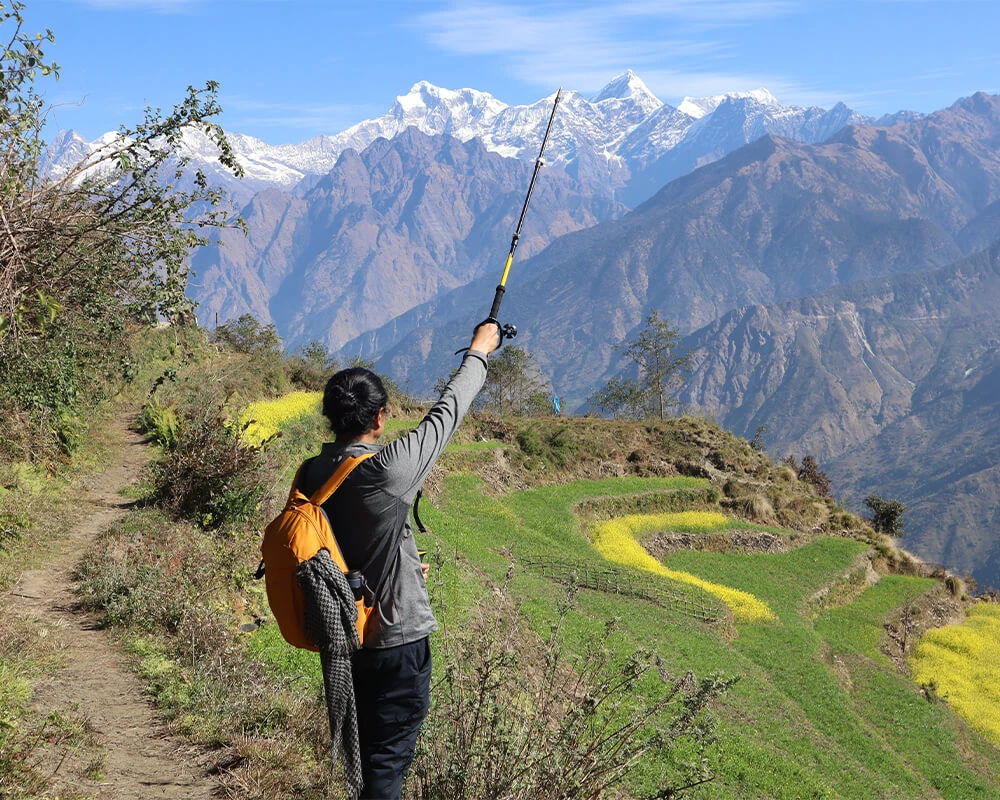
  • Witness the jaw-dropping natural beauty of the Manaslu region with dense forests, rivers, alpine flora, and dramatic landscapes
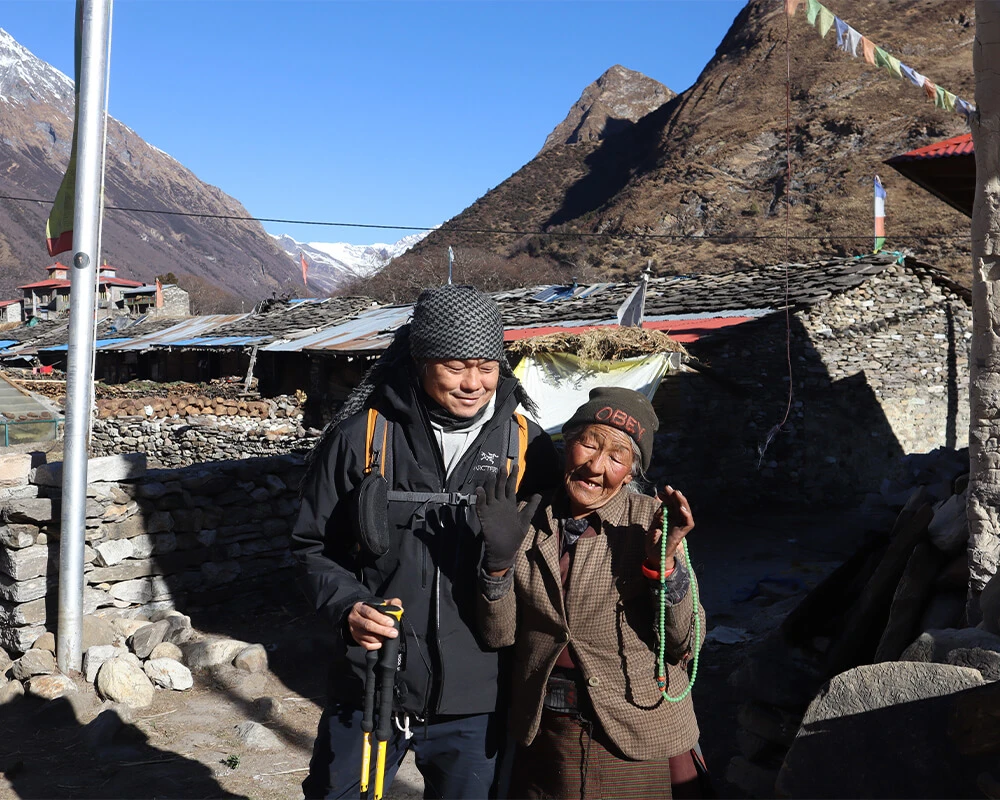
  • Connect with friendly local people and experience a unique blend of Nepalese and Tibetan cultures
  • Trek to Manaslu Base Camp (4,800 m) with close-up views of glaciers and towering Himalayan walls
  • Cross the legendary Larkya La Pass (5,106 m), one of the longest and highest trekking passes in the world
  • Enjoy stunning mountain panoramas of Mt. Manaslu (8,163 m), Himlung Himal, and Annapurna II
  • Walk under the shadow of Manaslu, the 8th highest peak in the world, a truly humbling Himalayan experience
  • Experience an off-the-beaten-path adventure, far less crowded than Everest Base Camp and Annapurna Circuit
  • Discover remote Bhotia settlements, untouched by modern life, preserving ancient Himalayan traditions
  • Follow an ancient trade route along the Budi Gandaki Valley, once used by Gorkha and Ghale kingdoms

Manaslu Circuit trek is one of the best trekking trails in Nepal. Many travellers who love adventure wish to visit this pure, authentic Himalayan path. Normally, many travellers follow the traditional route that leads to Jagat via Machakhola, but this package was customised to cover the best Gurung villages of the Gorkha region. The Manaslu circuit trek is one of the best treks in Nepal. It takes you around the Manaslu Conservation Area and leads to a breathtaking view of the eighth-highest mountain in the world. This trek can be a great alternative if you’ve already been to the Annapurna Circuit. The Manaslu Circuit Trek via Barpak is a 17-day trek that starts at Baprak and ends at Beshi Sahar. It can be extended to 23 days with an additional side trek to the Tsum Valley. Unlike the Everest Base Camp Trek, flooded with trekkers during the main season of autumn and spring, the Manaslu Circuit Trek usually sees fewer people along its route. It is remote and physically demanding, yet culturally enriching and scenically uplifting. The circuit takes you from the steamy lowlands with their rice and millet terraces through the mighty gorges of the Budi Gandaki, with their turquoise waters and amazing waterfalls. The suspension bridges in the Manaslu trek are in a league of their own for both length and height, and the yearly monsoon often washes minor bridges away, leaving trekkers to use semi-submerged rocks. 

First day, we will take a bus from Kathmandu to Barpak, which is 176 km, and takes around 7 hours. Barpak is a popular Gurung village, now more popular after the 2015 earthquake, the epicentre of that earthquake. The next day, Larpak, similarly, we will follow the main route after Jagat. The way is very scenic and crosses many local settlements. To maintain your body in thin air, we customise the itinerary with a proper acclimatisation day. First, you will stay in Samagaon, then Samdo. Normally, those who are interested in visiting the Tibet border need to stay one more day in Samdo. After that, cross the Longest mountain pass, Larkey Pass (5106m), then Bhimtang. Our trek ends at Dharapani, from where we catch the jeep to Kathmandu. Iconic Holiday Nepal can arrange your all-inclusive 15-day trek. The trek can be done on a teahouse unless you want to go off-route, where camping is the only option.
Itinerary
Expand AllCollapse All

  • Altitude1400m
  • AccommodationHotel
  • Time1 hour

Once your plane lands at the airport, make your way to the terminal and meet our representative. He will be there holding a placard bearing our company’s or your name. He will drive you to your hotel and help you check in.

  • Altitude1400m
  • AccommodationHotel

Manaslu Circuit trek is under restricted area trekking. To issue the permit, a valid visa is essential, so for hassle-free travel, we customise a package where we allocate one day as a free day before starting your trek. This time, you can check every essential item, if needed, do last-minute shopping, participate in a discussion programme, and mentally prepare for your upcoming amazing adventure.

  • Altitude1900 m
  • AccommodationLodge
  • Time6 hrs

A 6-hour bus journey from Kathmandu takes you to Barpak, a Gurung village in the northern part of Gorkha. The Barpak village was the epicentre of the 2015 earthquake that struck Nepal, destroying lives and houses.

  • Altitude2200 m
  • AccommodationTea house
  • Time5-6 hrs

 After breakfast at the lodge of your overnight stay, we begin our hike to Laprak. The trail through the Rhododendron forest is slightly uphill until we reach Boshu Khang (2800m), from where you can see the beautiful Ganesh Himal and Buddha Himal. The trail then descends towards the Gurung village, Laprak, passing by Gupsi Danda, a new settlement constructed to house earthquake survivors. Laprak was also severely affected by the 2015 Earthquake. Now with new buildings constructed in the village, the locals run a few lodges where you'll stay the night.

  • Altitude970 m
  • AccommodationTea House
  • Time6 hrs

From Laprak, you take a gradual descent, and then you climb up.  The trail weaves past Sing La village. En route, you are presented with picturesque Himalayan views. Take a breather and enjoy the breathtaking sights of the soaring snow-capped peaks and distant villages nestled on the side of the mountains. Our destination for today is Khorla Besi, and we will stop once we reach the village.

  • Altitude1400 m
  • AccommodationTea House
  • Time6 hrs

Our guide leads ahead on a trail that takes us to Tatopani, a famous hot spring. From Tatopani, we walk to Dovan and finally get to Jagat, a well-paved village on the threshold to the Manaslu conservation region.

  • Altitude1860 m
  • AccommodationTea House
  • Time6-7 hrs

After Jagat, we walk down to the river and follow its course on the trail that passes through beautiful terraced fields. Passing through the village of Sulleri, we see Philim far in the distance. A walk of about two hours from here will take us to Philim. Philim is comparatively a larger settlement on the trail. Leaving Philim, we continue on the main trail. The walk is pleasing, and you will be rewarded with the view of waterfalls cascading down in Budhi Gandaki on both sides of the trail. We cross the river many times and sometimes go high above it. After a walk of around four hours from Jagat, we reach our first Kani -- a stone arch -- of the trek. Deng is the next settlement that we see in the trial.

  • Altitude2630 m
  • AccommodationTea house
  • Time7 hrs

We continue the walk after having breakfast at our lodge. The walk is more or less similar. Descend to the river, cross it, and climb high above the river. After nearly three hours of trek, we reach a village named Ghap. Take some time to look out for the beautiful Kani as well as the mani wall. From here, the trail is through thick woods of pines, rhododendrons, and bamboo. Look out for monkeys. The village of Namrung welcomes you once you are done with the forested trail.

Note: Our final destination camp is 20km away from Deng, so we suggest starting the trek as early as possible

  • Altitude3500 m
  • AccommodationTea House
  • Time5 hrs

The first settlement that we come across today is Lihi Gaon. This village has numerous chhortens and intricately woven mani walls. Take some time to observe these ancient artworks. If the weather is good, you can get a clear view of Mt. Manaslu and other neighbouring peaks today. From here, we stop at Sho, which offers stunning views of Manaslu. We continue our walk northward. After crossing another bridge, we reach the village of Lho. After leaving the village, Ngadi Chuli emerges right ahead of us. The settlement of Syala is small but very scenic. 


  • Altitude3530 m
  • AccommodationTea House
  • Time2.5 hrs

The walk is shorter today. Leaving Syala, we follow the moraine of Pungen Glacier toward Sama Gaon. On the trail, we can enjoy amazing landscapes and excellent scenery. There is a beautiful monastery in the village. The monastery offers stunning views of Manaslu and other peaks. After lunch, you will explore the village and meet with locals.

  • Altitude3691 m
  • AccommodationTea House
  • Time4-5 hrs

This is the day of acclimatisation at Sama Gaon to prevent altitude-related illness. As an acclimatisation hike, you will walk to Pungyen Gompa, east of the Nubra Valley. Then hike to beautiful Birendra Lake and explore the surrounding areas.

  • Altitude3865 m
  • AccommodationTea House
  • Time4-5 hrs

Today, we climb to a terraced hillside on the other side of the Budhi Gandaki  River. Continuing further, we reach Samdo. Samdo is a small, remote settlement of about forty houses before crossing the Larkya La Pass and is inhabited by a Tibetan community that has preserved its traditional way of life. 

If you think of visit the Tibet border need one more day

Day Trip to Tibet Border: Trekkers often spend an extra acclimatization day here, with options for side hikes to explore the Tibetan border or the nearby ridges

  • Altitude4460 m
  • AccommodationTea House
  • Time3-4 hrs

Take the trail leading to Larkya Phedi or Larkya Base Camp. Today’s walk offers some of the best mountain views in this circuit. You walk very close to the mountains, and you can see the massive walls of these Himalayan peaks rising right above you. It is a humbling experience as you stand dwarfed by the gigantic mountains towering right above you. The dramatic landscape simply leaves you awe-struck. You stop at Dharamsala, a settlement with few houses. Have an early night as you will be crossing the Larkya La, a high mountain pass and the highest point of your trek at 5165m, tomorrow.

  • AltitudeLarkya Pass (5,106m)
  • AccommodationTea House
  • Time9 hrs

This is a special day as you will walk to the trail’s highest point. You will cross the pass before the afternoon, so you must wake up early( 4 a.m.), have breakfast, and leave the teahouse early. We make a gradual climb to Cho Danda. From here, the trail is steep uphill toward the pass. Fluttering prayer flags indicate that you have reached the pass. The view from the pass is magnificent. We get a clear view of Himlung Himal (7,126m), Cheo Himal (6,820m), Gyaij Kang, Kang Guru (7,010m), and Annapurna II. After taking photographs and spending some time at the top, we start descending toward Bhimthang. It’s a long and steep downhill from here to Bhimthang.

  • Altitude1970 m
  • AccommodationTea House
  • Time9 hrs

From a ridge at Bimthang, we can enjoy great views of Mt. Manaslu, Lamjung Himal, Himlung Himal, and Cheo Himal. We descend further and cross a high pasture (Sangure Kharka), followed by a bridge over Dudh Khola. We walk through a rhododendron forest and follow a trail through a narrow valley until we reach the highest cultivated land of the valley at Karche, 2785 meters. We pass across fields before making a steep climb over a ridge. The trail comes off the ridge in a big, sweeping arc to the river bank at 2580m. A short distance beyond is the village of Gho. After resting at Tilije, we continue our trek crossing the Dudh Khola, and following along its bank, we descend through the scrub forest. The walls of the Marsyangdi Valley loom larger, and, finally, the houses of Dharapani appear in the distance. Passing through Thonje via a wooden bridge and through a chorten-shaped arch, we arrive at Dharapani after crossing a long suspension bridge over the Marsyangdi.

  • Altitude1400m
  • AccommodationHotel
  • Time8 hrs

From here, you board a vehicle and take a drive to Kathmandu via Besisahar. The drive offers picturesque sights of green hills and rural farmsteads. Once you arrive in Kathmandu, check into your hotel and take a rest. In the evening, attend a farewell dinner (complimentary) at an authentic Nepalese restaurant to celebrate the completion of your trek.

    Departure day! Our representative will drive you to the airport three hours before your flight time so that you do not have to rush through customs and immigration formalities. You will have plenty of time to plan your next trip as you return to your home.

    Trip Cost Details
    Included
    • Transportation from Kathmandu to Barpak  and from Dharapani to Besisahar via shared Jeep 
    • Tourist Bus from Besisahar to Kathmandu
    • Three star accomodation in Kathmandu with breakfast
    • Twin sharing accommodation in local Tea Houses with sharing basis
    • All Meals during trek (Lunch, Dinner, and Breakfast) with seasonal fruits 
    • Government Licensed English speaking Iconic Holiday Nepal experienced trek leader (guide)
    • Porters to help trekker’s Bag Pack. (1 porter for every two trekkers, luggage weight limit per trekker is 10 kg.)
    • Guide and porters' cost - their meals, insurance, salary, lodging, transportation, and other necessary equipment
    • Manaslu Special permit, Conservation Area Permit, and Annapurna Conservation Area Permit (ACAP)
    • Rescue arrangements during emergencies (funded by travel insurance)
    • Achievement certificate after the successful trek
    Excluded
    • International flight airfare
    • Nepal entry visa fee | Tourist Visa Information
    • Extra night accommodation in Kathmandu due to early arrival or late departure, or early return from the trek
    • Travel insurance, which has to cover emergency high-altitude helicopter rescue and evacuation in addition to medical expenses (compulsory)
    • Tips for staff's 


    Useful Info

    Best Time for Manaslu Circuit Trek

    The best time for the Manaslu Circuit Trek is spring (March to May) and autumn (September to November). These seasons offer stable weather, clear mountain views, comfortable daytime temperatures, and good trekking conditions. Spring brings colorful rhododendron forests and wildflowers, while autumn offers exceptionally clear views after the monsoon. Late September to October is also a great time to experience Dashain and Tihar, Nepal’s major festivals. Winter brings cold temperatures and heavy snow around Larkya La Pass (5,106 m), while the monsoon season can make the lower trails wet and slippery. Because of the high mountain pass and changing weather, winter and monsoon are generally not recommended for the Manaslu Circuit Trek.

    Getting to the Manaslu Trek Starting Point

    The Manaslu Circuit via Barpak Trek starts from Barpak, a beautiful and culturally rich Gurung village in Gorkha, well known for its traditional lifestyle and resilience after the devastating 2015 Nepal earthquake. Barpak is accessible from Kathmandu by regular local bus, making it a budget-friendly option, while a private jeep can also be arranged according to the client’s preference. From Barpak, the trail passes through traditional villages, lush forests, river valleys, suspension bridges, and spectacular Himalayan landscapes before reaching Sama Gaon, Manaslu Base Camp, Larkya La Pass (5,106 m), and Dharapani. The trek officially ends at Dharapani, from where you take a local shared jeep to Besisahar. From Besisahar, you can continue the journey to Kathmandu by tourist bus or private vehicle, depending on your travel preference.

    Manaslu Trek Permits and Requirements

    The Manaslu region includes a restricted trekking area, so foreign trekkers need the appropriate permits and must follow current government regulations. The main permits generally include:

    • Manaslu Restricted Area Permit (RAP)
    • Manaslu Conservation Area Permit (MCAP)
    • Annapurna Conservation Area Permit (ACAP) for the section after Dharapani

    Permit Fees: Manaslu Restricted Area Permit fees vary by season and trekking duration. The rates for September–November (autumn) are different from those for December–August, and fees may be updated by the Nepal Government. For the latest and official permit fees, requirements, and regulations, please check the Department of Immigration, Nepal before planning your trek.

    Altitude Sickness and Acclimatization

    The Manaslu Circuit Trek reaches Larkya La Pass at around 5,106 m and includes several days above 3,000 m, making proper acclimatization important. Walk at a steady pace, stay hydrated, eat regularly, and allow enough time for your body to adjust to the increasing altitude. A properly designed Manaslu Circuit itinerary includes an acclimatization day, usually around Sama Gaon, before heading toward higher elevations. If you develop persistent or worsening altitude-related symptoms, descend and seek medical assistance. Travel insurance covering high-altitude trekking and emergency evacuation is strongly recommended.

    Drinking Water on the Manaslu Circuit

    Safe drinking water is available at teahouses and villages along the Manaslu Trek route, although the cost generally increases at higher elevations. To reduce plastic waste, trekkers are encouraged to carry a reusable water bottle and use filtered or boiled water. Many trekkers also use water purification tablets, which are easy to find at medical shops and trekking stores in Thamel, Kathmandu. A reliable water filter or purification system is another good option. Drink regularly throughout the day, especially at higher altitudes, and consider carrying electrolytes to stay hydrated during long trekking days.

    Internet and Mobile Connectivity

    Internet and mobile connectivity are available in many villages along the Manaslu Circuit Trek, but the connection can be slow or unavailable in remote sections. Many teahouses provide Wi-Fi for an additional charge. A local Nepal Telecom SIM card can also be useful where mobile coverage is available. Do not expect reliable internet throughout the entire trek—part of the attraction of the Manaslu region is its remote Himalayan environment.

    Manaslu Circuit Trek Packing List

    For the Manaslu Circuit Trek packing list, please refer to our detailed Manaslu Travel Guide, where you will find useful and practical information about the region, trekking conditions, weather, altitude, accommodation, water, permits, and essential equipment. This will help you understand the Manaslu region travel requirements and prepare properly for your trek.

    Our global team of experts is here to assist you.

    Need Travel Advice